
A widget is a place for a useful thought, not a smaller feed
The most important RiseHush widget decision happens before a user chooses a size: the widget is treated as a place a thought can meet you, not as a miniature version of the app. That distinction changes the design. The line needs to be readable before the user has decided to spend time. The author should remain attached to it. A button should have a clear job. And if a person taps through, the app should feel like a natural second step rather than a trapdoor into endless scrolling.
Apple describes widgets as information that is available at a glance. RiseHush builds on that idea with a source-aware quote surface, optional explanation cues, streak context, favourites, and category-led variations. The goal is not to put every feature into every rectangle. The goal is to give each surface one emotionally useful first move: notice the line, save it, move to the next one, or open the deeper context when you actually want it.
The direct simulator capture below is deliberately identified as an app-feed capture, not mislabelled as a widget. It records the surrounding RiseHush experience that widgets hand back to: the quote, the small streak surface, the explanation action, and the bottom navigation that lets a user choose depth. The widget itself is rendered by WidgetKit and can be placed on the Home Screen, Lock Screen, Today View, supported Apple Watch surfaces, and Mac desktop according to the current build and device family.
 risehush.com
The widget family map: choose the smallest surface that still feels human
RiseHush’s primary widget configuration declares four Home Screen sizes—small, medium, large, and extra large—and three accessory families for compact surfaces: circular, rectangular, and inline. The same idea changes shape across Apple platforms. A small widget can carry one sentence or a simple state. A medium widget can give the sentence enough line length to breathe. A large or extra-large widget can include more context, a streak or a carefully chosen action row without forcing every control into the first glance.
The current product also includes dedicated Home Screen widget variants for quote of the day, a quote player, category quotes, favourites rotation, a minimal one-liner, streak tracking, and streak insights. These names are implementation surfaces, not a promise that every user sees every variant in every storefront or operating-system version. Availability depends on the installed app build, the platform, and the widget gallery on the device.
| Surface | Best use | What to protect |
|---|---|---|
| Small Home Screen | One short cue, a favourite, or a compact daily quote | Readable type and one obvious tap target |
| Medium Home Screen | A longer quote with author, category, or a small action row | Line length, contrast, and space around buttons |
| Large / extra large | A richer quote view, streak context, or multiple glanceable actions | Hierarchy: the quote must still win over the chrome |
| Lock Screen accessory | A sentence or compact prompt during a time check | Short copy and an honest expectation of glanceability |
| Apple Watch accessory | A brief daily quote and, on supported surfaces, a next-quote action | Do not shrink a paragraph into an unreadable complication |
| Mac desktop | A persistent quote surface beside work without opening the app | Quiet presence, legible hierarchy, and low interruption |
What you can customize: style, category, rotation, and attention level
The headline configuration for the classic RiseHush widget exposes two direct choices: Style and Show Buttons. Style can be Standard or Minimal. Show Buttons lets the user decide whether the compact action row belongs on that instance. That is a small-looking choice with a meaningful effect: one person wants a quote to be a quiet visual anchor; another wants the same surface to support next, save, or share actions.
The newer Home Screen variants expose more intent-driven choices. Depending on the widget, the settings include display style, whether to show the author, whether to show streak context, rotation cadence, a category, a daily goal, a milestone target, or whether a favourites count should be visible. A category quote can be tuned toward motivation, study, work, confidence, resilience, or another available category. A favourites rotator can keep the surface close to lines the user has already chosen rather than asking a random quote to carry the whole ritual.
Apple’s configurable-widget model is important here: the user’s choices are not decorative switches applied after rendering. WidgetKit passes the configuration into the timeline provider, so the provider can produce entries that match the chosen properties. In RiseHush, that means the same widget kind can become a more minimal line, a category-specific prompt, or a surface with a different amount of supporting context while remaining one coherent design system.
Visual tone
Choose a standard or minimal treatment where that configuration is offered. Minimal is useful when the widget should disappear into a calm Home Screen; standard is useful when the quote needs a little more framing.
Quote direction
Use a category-aware widget when the intention is specific: motivation before work, resilience after a difficult day, or a confidence cue before a conversation.
Context level
Show the author, streak, favourites count, or buttons only when the extra information helps the ritual. More controls are not automatically more useful.
Rotation
Choose a slower, daily cadence for remembrance or a quicker cadence when a widget is being used as an active prompt. The system still controls the precise refresh moment.
Long-press holding is the control surface that makes the widget personal
On iPhone, the long press is not a hidden RiseHush gesture; it is Apple’s standard way to manage a widget after it has been placed. Touch and hold the Home Screen background until the icons jiggle, choose Edit and Add Widget, search for RiseHush, swipe through the available sizes, and add the family that matches the job. Once the widget is on the Home Screen, touch and hold that widget and choose Edit Widget when the option is available. Change the offered settings, tap outside the widget, and then tap Done to leave editing mode.
The edit menu is where the broad promise of customization becomes a practical question: what should this particular rectangle do for me? A medium quote player with Show Streak enabled can function as a gentle progress cue. A small minimal quote with buttons hidden can become a quiet sentence beside a calendar. A category widget can be aimed at the next context rather than the whole self. The best setup is not the most feature-rich one; it is the one that removes one decision at the moment you need the cue.
On the Lock Screen, the flow is different because Apple gives the Lock Screen its own editor. Touch and hold the Lock Screen, choose Customize, then Add Widgets. On Apple Watch, a complication or widget surface is governed by the watch face and the available family. The principle remains the same: use the long press or edit state to establish the surface, then let the normal glance do the emotional work.
- Start with one RiseHush widget, not a wall of reminders.
- Choose the family where the quote remains readable at a real glance.
- Open Edit Widget and change only one setting at a time so you can feel the difference.
- Use a category when your next context is clear; use a general quote surface when it is not.
- Hide buttons when interaction is adding noise; show them when next or favourite is genuinely part of the ritual.
Interactive actions: next, favourite, category, and the return to context
RiseHush’s Home Screen widget actions are designed to make a few small changes without requiring a full app launch. Next Quote advances the current widget instance and records the new visible quote in the shared widget state. Toggle Favourite can save or remove the visible line. Category selection changes the category associated with a widget configuration, while the widget’s deep link can return the user to a specific quote or share flow when the deeper app context matters.
That division is healthy. A widget should be able to perform a bounded action in place, but it should not pretend that a full reading experience can fit inside every widget family. The next action is a small reset. Favourite is a small act of choosing. Explanation, source inspection, translation, and longer reflection belong in the app, where the interface has enough room to stay honest.
On Apple Watch, the current control widget exposes a rectangular quote surface with a Show Author configuration parameter. Its Next Quote intent is designed not to open the app, advances the selected quote, and asks WidgetKit to reload its timelines. That produces a useful kind of dynamism: the surface can change because the user asked it to, while the device remains focused on the brief interaction rather than a full session.
Read
The timeline entry renders one quote with the family-appropriate amount of context.
Choose
A bounded App Intent can move to the next quote, save it, remove it, or change a configured category.
Reload
RiseHush asks the relevant widget timeline to refresh so the visible state can catch up.
Return
If the reader wants attribution, explanation, translation, or a full collection, a deliberate deep link returns them to the app.
Dynamic does not mean unpredictable: how quote rotation really works
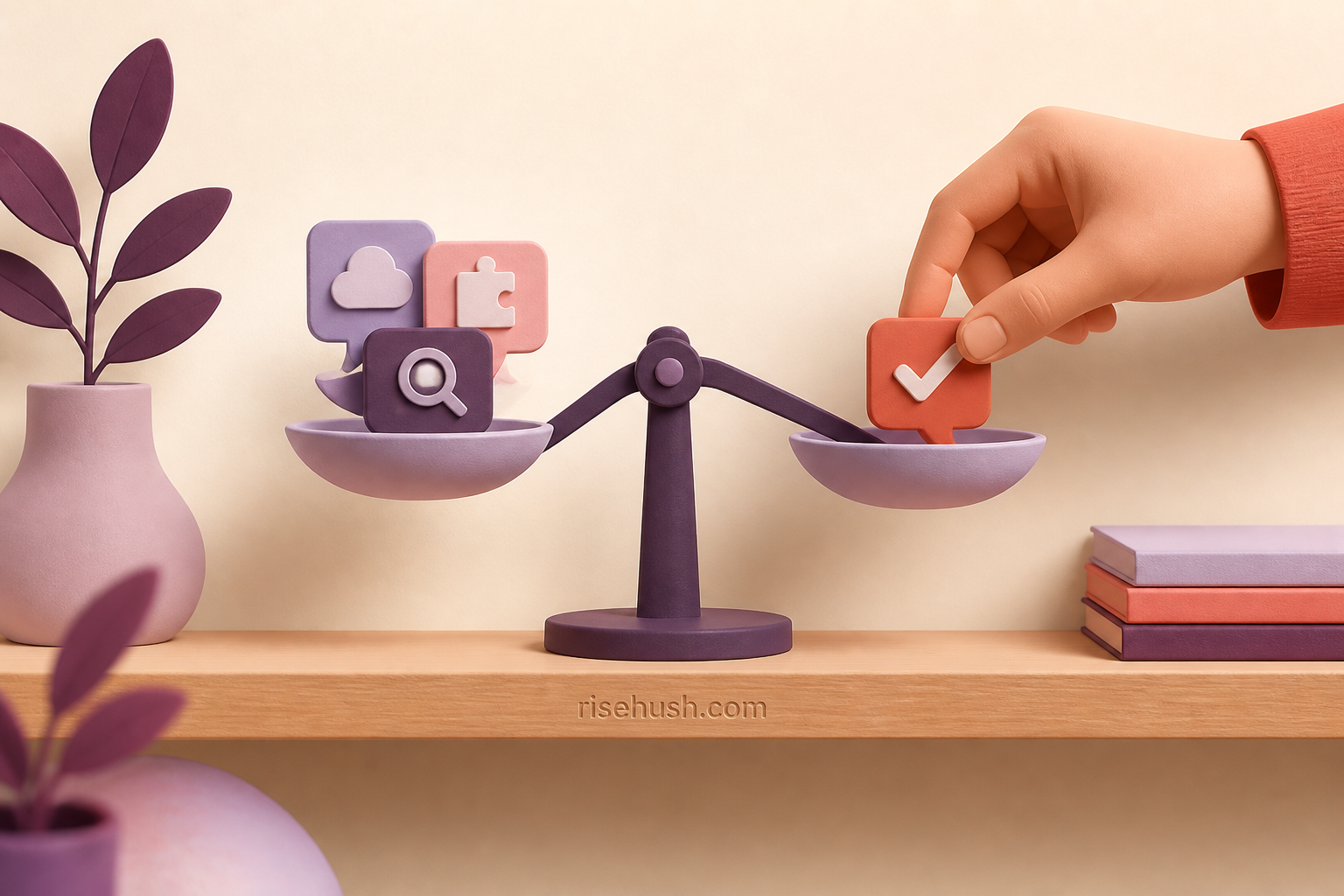
A good motivation widget can change over time without becoming a slot machine. RiseHush uses WidgetKit timeline providers and App Intent configurations so that a widget can receive a series of entries and render the user’s chosen configuration. Some actions also request a reload after a user event. That is the right mental model for a dynamic quote surface: scheduled entries plus explicit refresh signals, all inside the operating system’s budget.
The important caveat is that a timeline date is an earliest request, not a promise that the pixels will change at the exact second. WidgetKit may update later. Network availability, power, system scheduling, the installed platform, and the widget’s own data state all matter. That is why the article avoids saying that every widget rotates at a guaranteed minute or that a tap always creates an instant new quote. A trustworthy product teaches the user what the surface can do and what the operating system controls.
For a positive ritual, that boundary is a feature. The widget should not demand constant novelty. A slower daily line creates room for memory and application. A next button exists when the user has intentionally finished with the current line. A timeline can support continuity without turning attention into a meter that must be fed.
Why the design can feel positive without becoming loud
RiseHush’s widget design works best when it treats positivity as a quality of attention, not as a color palette or an instruction to ignore difficult feelings. A line can be encouraging without claiming that every day is easy. A streak can be visible without becoming a verdict. A button can invite a next step without implying that a user has failed if they do nothing.
This is also why author visibility and source awareness matter. A quote that looks beautiful but loses its wording or provenance is not a better cue; it is a more polished uncertainty. The product’s quote catalog and Correctly Credited work give the app a way to keep the sentence connected to evidence, while the widget keeps the first encounter light enough to be usable.
The strongest widget is therefore a designed pause. Its typography gives the sentence enough time. Its background supports rather than competes. Its action row is short. Its configuration lets different people choose a different amount of context. And its route back to the full app is available without making the glance feel incomplete.
“A widget should leave you with a thought you can carry, not a feed you have to finish.”
RiseHush editorial principle · Product design note
A practical setup for mornings, work, study, and difficult days
There is no universal best widget layout because the useful surface changes with the moment. A morning setup may benefit from a medium quote with the author and a restrained action row. A work setup may be better with a small minimal line that does not compete with the task list. A study setup can use a category-led prompt and a slower rotation. A difficult day may call for a favourite quote that has already earned trust rather than a new motivational sentence chosen by chance.
Treat the first week as a design test. Keep the widget in one place. Notice whether you read it, whether you tap next because you want to, and whether the quote survives long enough to become a thought rather than a notification. If you keep editing the widget because the text is too small, choose a larger family. If the buttons feel like pressure, hide them. If the words are too general, choose a category or use a saved favourite.
- Morning: medium quote, author visible, daily or slower rotation.
- Work: small minimal quote, buttons hidden, low visual contrast.
- Study: category-specific quote, enough size for two or three lines.
- Fitness: a short resilience or consistency cue, not a performance claim.
- Difficult day: a trusted favourite, with the full source available in the app.
What this guide proves—and what it does not
The implementation inspection for this guide verified the widget families, App Intent configuration fields, interactive intent names, Apple Watch control behaviour, and timeline reload calls in the current RiseHush source. Device Hub also supplied a live iPhone 17 Pro Max / iOS 27 capture of the running RiseHush app. The companion settings image comes from the RiseHush product media archive and shows the in-app Widgets entry beside appearance, Siri, and privacy controls.
WidgetKit Simulator was opened with the built RiseHush widget extension during this review, but its preview remained on Loading rather than producing a usable widget image. That result is not evidence that the widget is unavailable on a customer device, and it is not a reason to invent a screenshot. The public page therefore labels the runtime evidence precisely and keeps platform availability subject to the current installed build and App Store listing.
This distinction is part of the product promise. When a quote is uncertain, RiseHush labels the uncertainty. When a platform capture is incomplete, the Journal labels the capture boundary. Trust is not a decorative layer added after the feature; it is the feature’s operating condition.
 risehush.com
What RiseHush widget sizes are available?
The current primary RiseHush widget declares small, medium, large, and extra-large Home Screen families plus circular, rectangular, and inline accessory families. Other specialized widget variants may support a narrower set of families on a particular platform.
Can I change what a RiseHush widget shows?
Where a widget offers configuration, long-press it and choose Edit Widget. Depending on the variant, the available properties can include style, buttons, display style, author visibility, streak context, category, rotation, daily goal, milestone target, or a favourites count.
Can I press a button without opening RiseHush?
The current widget implementation includes bounded App Intent actions such as next quote and favourite changes that are designed not to open the main app. The exact actions depend on the widget variant and installed platform.
Will a quote change exactly at the time I choose?
Not necessarily. WidgetKit timelines provide the earliest time a refresh may be requested, and the operating system may update later. User actions can request a relevant timeline reload, but the system still manages execution.
Does the Device Hub screenshot show a widget?
The clean Device Hub image in this article is explicitly an app-feed capture from an iPhone 17 Pro Max running iOS 27. It documents the app surface that widgets return to; it is not presented as a Home Screen widget screenshot.
- RiseHush — Everywhere: Apple surfaces and device context
- Apple Support — Add, edit, and remove widgets on iPhone
- Apple Developer — WidgetFamily
- RiseHush — Widgets and Apple-device product overview
- Apple Developer — Making a configurable widget
- Apple Support — How to add and edit widgets on your iPhone
- RiseHush — Method and quotation evidence boundaries
- Apple Developer — WidgetConfigurationIntent
- Apple Developer — Timeline and WidgetKit refresh policy
- RiseHush — Positive mindset without toxic positivity
- RiseHush — Daily motivation for work
- RiseHush — Correctly Credited quotation archive